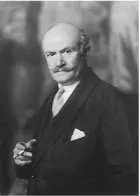

Philip de László, one of the most revered portrait artists of the late 19th and early 20th centuries, is often considered the successor to John Singer Sargent. Born on April 30, 1869, in Budapest, Hungary, de László began his artistic journey as an apprentice to a photographer. His talent and dedication earned him a place at the National Drawing School in Budapest. Seeking further refinement, he moved to Munich and then Paris. In 1894, de László received his first royal commission to paint Prince Ferdinand and his wife. By 1903, he had moved to Vienna and in 1907, he set up his studio in London, where he continued to work until his death in 1937.

De László’s early life at the academy was marked by a rigorous training that laid the foundation for his future success. His career breakthrough came with the commissions to paint Prince Ferdinand and Pope Leo XIII, the latter of which in 1900 brought him international acclaim. This portrait opened doors to commissions from royalty and high society across Europe. In 1907, de László moved to London, which became the center of his artistic activities. His relationship with the Royal Academy in the UK was complex and sometimes contentious.
Despite early rejections, he eventually gained acceptance, although not without challenges. His portrait of Lady Wantage was accepted in 1911 but hung in a less prominent position, causing de László much frustration.
When World War I began on August 4, 1914, de László was living in London. The war created an intense demand for portraits from serving officers and their families. During this period, his rates dropped from 400 pounds to 50-100 pounds for a half-size portrait. His speed and efficiency were crucial; for instance, his portrait of Captain Maurice Trouton was completed “during one sitting.”

In 1917, de László was arrested due to suspicions arising from his letters and money sent back to his family in Hungary. He was released in 1919 after his case was heard by the Naturalisation Revocation Committee. He then set up a new studio in London and returned to prominence, receiving numerous commissions from high society until his death in 1937. Notable works from this period include portraits of King Edward VII, Queen Elizabeth, and U.S. President Theodore Roosevelt.
His Relationship with the Royal Academy
De László’s relationship with the Royal Academy was fraught with difficulties. In 1904, one of his patrons, Lady Stanley, encouraged him to submit his work to the Academy, only to see it rejected. Lady Stanley expressed her disappointment, stating, “I think there must be something wrong with the Hanging Committee this year. I look upon their conduct as quite unjustifiable.” This pattern of rejection continued until 1911, when his portrait of Lady Wantage was accepted but placed in a corner, which de László saw as an insult.

In 1915, his painting of Lord Devonport was rejected due to his Hungarian birth. The rejection prompted a comment from the sitter, stating, “They should be compelled to answer the conundrum of their own making- when is an Englishman not an Englishman? Their answer would probably be, ‘When he paints too well’.”
His Family Life
De László met his wife, Lucy Guinness, in 1892 at a Hungarian Student Ball in Munich. It was love at first sight, and they married in 1900. Lucy managed the challenges of her husband’s volatile artistic temperament and their energetic brood of five boys, all born within a 12-year period. As their children grew older, Lucy began traveling with her husband, meeting royalty and heads of state across America, Jerusalem, Tunisia, and much of Europe. Despite his relentless pursuit of artistic excellence, de László’s family provided a balance work and life.


His family portraits are among his most natural and dynamic works, free from the demands of patrons. These compositions capture the personalities of his wife and sons, inspired by their domestic surroundings.
His Stylistic Changes
De László’s early style was influenced by his academic training, characterised by restrained colour palettes and a strong emphasis on realism. This foundational period focused on precise composition and meticulous attention to detail.
As his career progressed, de László’s style became more expressive. He began using broader brushstrokes and richer colours, resulting in more dynamic compositions. This evolution reflected his growing confidence and the influence of contemporary artistic movements. In his later years, de László’s style reached a level of maturity marked by a synthesis of his earlier realism and later expressiveness. His late portraits are celebrated for their vibrant colour schemes and the fluidity of their brushwork, capturing the essence of his subjects.

His Painting Process
De László’s painting process was a meticulous blend of technical skill and psychological insight. He uses limited palette and it includes Ultramarine, Madder, Rose Madder, Zinc White, Cadmium Yellow Pale and Deep, Yellow Ochre and Burt Sienna. For particular paintings, he adds Ivory Black, Veronese Green, Alizarin and Cadmium Orange. While most of the colours he used are still available today, Veronese Green, which is extremely toxic, can be replaced with Viridian. He mentioned that he likes Zinc White over Flake or Lead White.

He used poppy oil with Zinc White to achieve a thinner consistency and slower drying time. In the initial stages of painting, he might use turpentine or mineral spirits to create an underpainting.
His brushes, including hog brushes, filberts, flats, brights, and rounds. He likes to use fresh brush to mix new colours in maintaining the cleanliness of colours and precision in his work. In the meantime, he tries to avoid mixing more than two colours at the same time to keep his colour clean.


Understanding the sitter’s personality was crucial to de László’s process. He engaged in conversations with his subjects to make they relaxed and observe their characters. This approach allowed him to pose his sitters in ways that reflected their true nature, resulting in portraits that were both realistic and expressive. He uses quick charcoal sketches to capture initial impressions. In his charcoal sketches, de László recorded his intentions for the painting, focusing on the placement of shadows and highlights. These sketches also captured the gesture of the figure, facial expressions, and the overall composition.
When he began painting, he placed his canvas next to the sitter, utilising the sight-size method, which involves constantly moving back and forth to check for mistakes and the overall effect. He did not use transfer techniques or photographic references, stating that he was “drawing with his brushes.” In the meantime, de László valued frames and believed they should be part of the painting process, ensuring the painting and frame matched perfectly.
De László began each painting by placing a few lines on the canvas to indicate the figure. Starting with the head, he focused on finding the large planes and construction of the skull, working simultaneously on the head and surroundings to maintain consistency. Once the head was completed, he moved to the hands. He believed hands were as important as the face in expressing personality, though they were harder to paint due to their constant movement. To bring a natural sense to his paintings, he encouraged his sitters to move slightly from time to time, avoiding stiffness and dullness in the final work. Accessories and background elements were often added later, using lay figures if necessary. However, De László also paid close attention to how sitters wore their clothes, as this revealed much about their personalities. His approach emphasised the general effect of the painting rather than focusing on particular parts, a method that allowed him to capture the likeness and essence of his subjects effectively.


A mirror was an indispensable tool for de László, helping him identify mistakes in drawing and the relationship of values. This practice provided a fresh perspective, ensuring the accuracy and harmony of his compositions.
Conclusion
Philip de László’s journey from a humble apprentice to a renowned portrait artist is a story of passion, perseverance, and extraordinary talent. His portraits, characterized by their lifelike quality and emotional depth, capture not just the physical appearance but the very essence of his subjects. De László’s work remains a testament to the enduring power of art and its ability to transcend time, offering a glimpse into the lives and personalities of some of the most influential figures of his era.
His legacy is preserved through his extensive body of work and the profound impact he had on portrait painting. His ability to capture the soul of his sitters, combined with his technical mastery, set him apart as a true successor to John Singer Sargent. De László’s portraits remain timeless, celebrated for their elegance, depth, and realism.
Written by student Xueyu following her talk on de László as part of her half scholarship.
Resources
– Philip de László Catalogue Raisonné(https://www.delaszlocatalogueraisonne.com/de-laszlo/technique-frames)
– Painting a Portrait by de László Blog(https://paintingaportraitbydelaszlo.wordpress.com)
– YouTube – Philip de László Techniques(https://www.youtube.com/watch?v=Mx9abKh-XPc&ab_channel=DarrenRousar)
– YouTube – Bridgeman Images on de László(https://www.youtube.com/watch?v=jSD0c0oVFNM&ab_channel=BridgemanImages)
– Philip de László: Master of Elegance
This blog references information from the books ‘Philip de László: Master of Elegance’ and ‘Painting a Portrait by de László’.
The post Philip de László: A Timeless Legacy appeared first on London Fine Art Studios.